· by Michael Blair, Nashville's Chimney Sweep
Chimney inspections come in three levels, set out in NFPA 211, the National Fire Protection Association’s standard for chimneys and fireplaces, and the difference between them is how much of the system gets looked at and how much has to be opened up to do it. The wording we follow below is from the NFPA technical committee’s 2024 draft of the standard’s inspection chapter, written for the next edition, so the edition in force may phrase some of it differently. Level one is the one that comes with an annual sweep, and there are specific situations where the standard calls for the second instead.
What does a level one chimney inspection cover?
An examination of the readily accessible parts of the chimney and the accessible parts of the appliance and its connection to the chimney. The sweep confirms the flue is free of combustible deposits and of any blockage or obstruction. On the flue itself, level one covers only what can be seen through openings that are already there: a thimble, a cleanout, the top of the chimney. If a stove or an insert sits in the fireplace, the draft has it removed where that is needed to see the chimney behind it.
It is the right inspection when nothing has changed: the same appliance, the same use, no problems and no work done since the last one. The draft ties level one to the annual inspection and to routine cleaning of a flue, which is why we do one at every chimney sweeping visit.
Level two, and when it is required
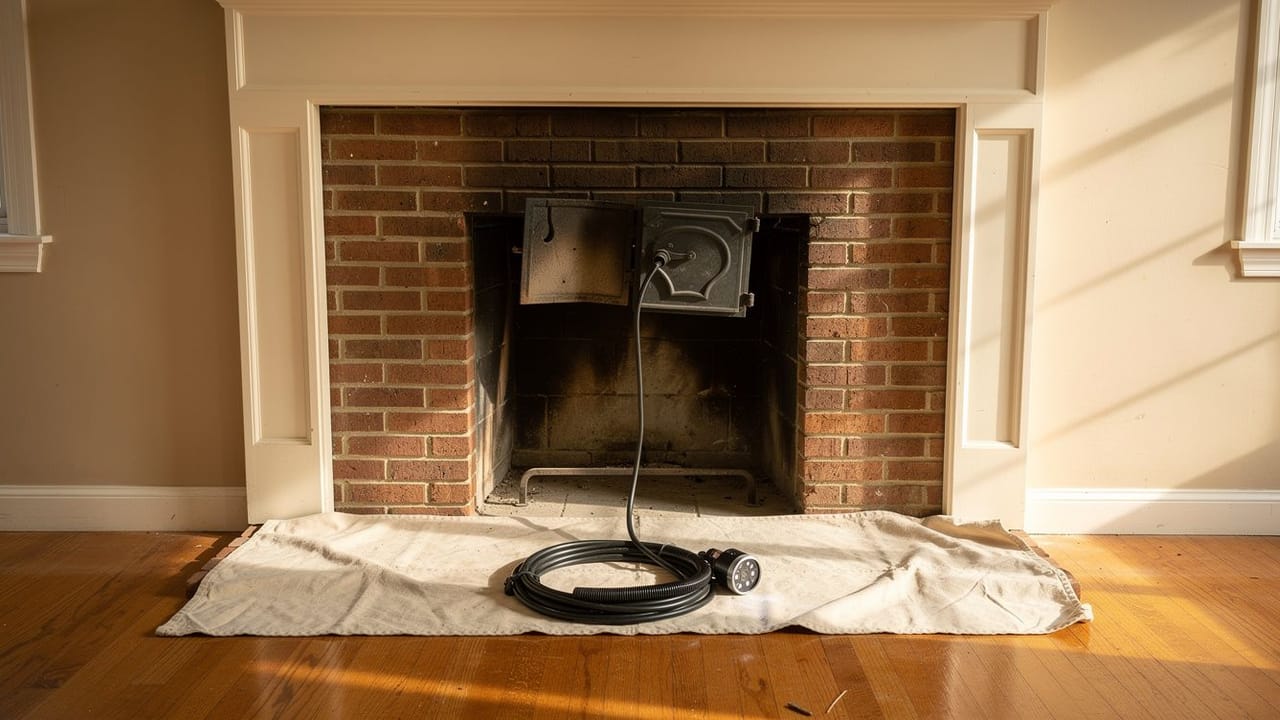
Everything in a level one plus all the accessible parts of the chimney exterior and interior, including the stretches that run through accessible attics, crawl spaces and basements. The draft has the flue examined by video scanning or other means, so a level two usually includes a camera run down the inside of the flue, which is the work behind our camera chimney inspection.
The draft calls for a level two on the sale or transfer of a property; when an appliance is added or removed, or swapped for one of a different type, input rating or efficiency; before a flue is relined or its lining replaced; and after a malfunction or an outside event likely to have damaged the chimney, which it spells out as a building or chimney fire, a weather or seismic event, or a similar incident. Those occasions come from the standard itself. The Nashville Fire Department’s list of code editions names the 2024 International Fire Code and the 2024 NFPA 101 Life Safety Code with local amendments, and NFPA 211 is not on it. We recommend a level two in every one of those cases anyway, because each is a moment when the chimney may no longer be the one that was last inspected.
- Level one: annual, nothing has changed
- Level two: sale, appliance change, before relining, or after a damaging event
- Level three: opening up concealed areas where a hazard is suspected
- A video flue scan is part of level two, not level one
- Buying a house with a fireplace warrants a level two
What does a flue camera find that eyes miss?
Cracks in clay flue tiles, particularly after a chimney fire. University of Missouri Extension’s guide to chimney and wood stove safety puts the temperature of a chimney fire as high as 2,000 degrees Fahrenheit and says the heat can crack the tile liner of a masonry chimney or warp a metal one. Since level one sees the flue only through existing openings, a crack partway up can go unnoticed until a camera passes it. On the footage we also look for open mortar joints between tiles, missing pieces of liner, and damage where the flue passes through a floor or an attic.
This matters because the liner keeps the fire and its heat inside the flue and away from the framing around the chimney. The Missouri guide warns that sparks can get through cracks or holes into the attic or the framework around the chimney. The flue is also how combustion gases leave the house, and the Tennessee State Fire Marshal’s Office winter safety reminder says all fuel-burning equipment should be vented to the outside to avoid carbon monoxide poisoning, and that smoke and carbon monoxide alarms should be tested at least once a month. We would not light a fire in a flue with a cracked liner, and our post on when a chimney needs relining covers what the repair involves.
When is the best time for a chimney inspection?
The same State Fire Marshal’s reminder asks Tennesseans to have heating equipment and chimneys inspected every year, and the sensible point in the year is before the first fire. We like late summer or early fall for it. In our experience the calendar fills once the first cold snap arrives, and a chimney found to need relining in November can be out of service for part of the winter you wanted it for.
Looking before the season also turns up any animal that moved in over the spring before a fire is lit under it, and it tells you whether the chimney has a cap at all. What we do when we find one is in our post on birds, squirrels and bats in the chimney. If you want yours looked at before you light it this year, ask us for a free estimate.
Sources
- NFPA Technical Committee CHI-AAA, Committee Input No. 9 for NFPA 211, Chapter 15 Inspection of Existing Chimneys (draft, 2024-08-27) — Three inspection levels; level one scope, deposits and obstruction, flue seen through existing openings, inserts removed as necessary; level two scope with video scanning and its occasions (sale, appliance change, before relining, damaging events); level three scope and triggers; no inspection once the last appliance is removed. Draft text for the next edition, not the edition in force
- Tennessee State Fire Marshal’s Office, SFMO Reminds Tennesseans to Take Steps Today to Stay Warm and Safe All Winter (2023-12-07) — Inspect heating equipment and chimneys every year; vent fuel-burning equipment outside to avoid carbon monoxide poisoning; test smoke and CO alarms monthly
- University of Missouri Extension, G1735 chimney and wood stove safety (reviewed January 2023) — Chimney fires up to 2,000 degrees Fahrenheit crack tile liners and warp metal chimneys; sparks through liner cracks reach the attic and framing
- Nashville Fire Department, Fire Marshal’s Office, Code editions (updated 2026-09-15) — Metro enforces the 2024 International Fire Code and 2024 NFPA 101 with local amendments; NFPA 211 is not listed
FAQ
What a Chimney Inspection Actually Covers — questions
How often does a chimney need to be inspected?
Every year. The Tennessee State Fire Marshal’s Office advises an annual inspection of heating equipment and chimneys, and we apply that to any chimney or flue connected to an appliance you use, gas fireplaces and furnace flues included, not only wood-burning fireplaces. Sweeping is a separate question driven by how much creosote has built up, and the inspection is what tells us whether a sweep is needed now.
Do I need an inspection if I never use the fireplace?
If nothing at all is connected to the chimney any more, the NFPA committee draft says the inspection is not required once the last appliance is removed and the chimney is no longer used. The flue may still serve a furnace or water heater even though the fireplace sits idle, and then it needs its annual inspection like any other. If you plan to start using the fireplace again, have it inspected before that first fire.
What is a level three inspection?
One that removes parts of the building or the chimney, only as far as necessary, to reach concealed areas that cannot otherwise be examined. Under the NFPA committee draft it applies when a hazard found or suspected in a level one or two cannot be fully evaluated without that access, or to investigate a fire, a weather or seismic event, or another incident known to have damaged the chimney or the building. It is limited to the areas in question and is not something ordered speculatively.
What are the levels of chimney inspection?
There are three in NFPA 211. Level one checks the readily accessible parts and comes with an annual sweep. Level two adds every accessible part inside and out and a video scan of the flue. Level three removes parts of the building or chimney to reach concealed areas, and only where a suspected hazard requires it.