· by Michael Blair, Nashville's Chimney Sweep
An uncapped chimney is a sheltered vertical cavity, which is exactly what several species look for. What you can do about it depends on the species and the time of year. Nests and droppings are among the things we look for during a chimney inspection, and the answer is different for a swift, a raccoon and a bat.
Do chimney swifts nest in Tennessee chimneys?
They nest in chimneys all over the state. TWRA’s chimney swift account calls them a common summer resident across Tennessee, most numerous in urban and suburban areas, and says only one pair will nest in a given chimney. The nest is a small half-saucer of twigs glued to the inside wall with the birds’ saliva. According to the U.S. Fish and Wildlife Service’s guide to chimney swifts, they are protected by the Migratory Bird Treaty Act, which makes harassing, injuring or killing the birds, or disturbing their eggs and nests, illegal.
So the work waits for the birds. TWRA says they usually arrive in Tennessee by late March and leave by mid-October, and FWS advises cleaning the chimney outside the nesting and roosting season and keeping the damper closed once the heating season is over, so birds do not drop into the fireplace. We sweep a swift chimney in that late-fall-to-early-spring gap. A cap would keep them out for good, but FWS asks owners not to cap a chimney swifts use and suggests taking an existing cap off in spring. If you decide to cap one anyway, it goes on after the birds have gone, never while they are inside.
Do raccoons and squirrels get into chimneys?
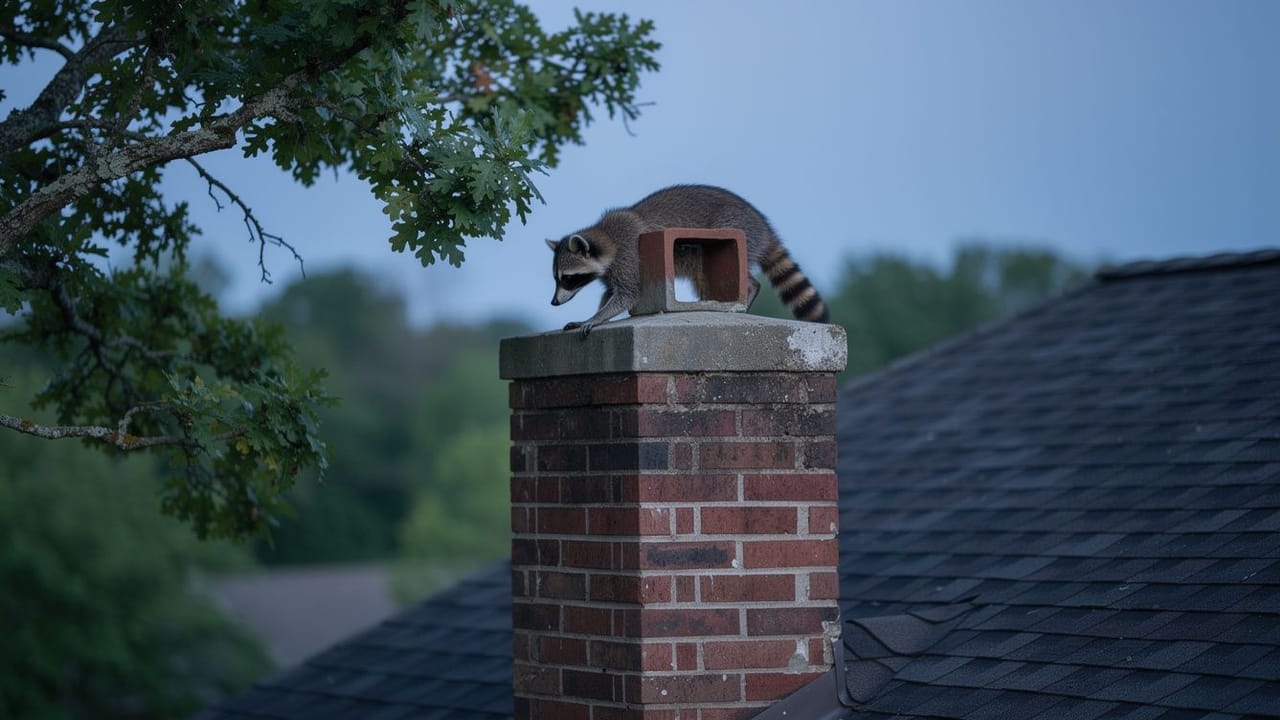
Raccoons are the ones that move into the flue itself. Cornell Cooperative Extension’s raccoon fact sheet lists chimneys next to attics as places they take up residence, and it says that before excluding raccoons from a chimney in spring or summer you should first make certain no young are there. A mother with kits should not be locked out. Squirrels tend to come in around the chimney rather than down it: UT Extension’s guide to managing nuisance animals around the home names loose flashing around chimneys and vent pipes among the openings to look for.
Removal is usually done by a permitted Animal Damage Control operator. TWRA’s wildlife damage control page says its officers typically do not trap or remove nuisance wildlife, that operators it permits do it at the landowner’s expense, and that a landowner can legally capture some nuisance species causing damage without a permit. Either way, TWRA’s rule is to make sure every animal has left before any entry point is closed. Once they are out, we close the way in, whether that is a cap on the flue or the flashing the squirrels pulled loose, which is the work on our caps, crowns and flashing page.
- Chimney swifts are federally protected: leave the birds, eggs and nest alone until they migrate
- Check for young before any animal is shut out
- Never light a fire to drive animals out
- A cap of sheet metal and heavy screen keeps raccoons out of the flue
- Bat exclusion needs TWRA approval and stays clear of the summer maternity season
Can you smoke animals out of a chimney?
We do not use smoke to move anything out of a chimney. Under swifts it means harming birds the law protects, and FWS tells hosts to use the fireplace only when swifts are not present. Under a raccoon there may be young in the chimney, which is exactly the case Cornell and TWRA say to check for before doing anything at all.
Swift nests are not the fire risk people imagine. FWS says swifts do no structural damage and pose no fire or health hazard, and it calls cleaning the creosote off the flue extremely important for fire safety. Sticks, leaves and bedding from squirrels or raccoons still have to come out before the next fire, and that is part of every chimney sweep we do. Raccoons leave a cleanup problem as well: Cornell names fireplaces among the places their droppings can contaminate, warns about raccoon roundworm, and advises disposable gloves, disposable clothes and a dust mask for the job.
Capping
For raccoons and squirrels, a cap is the exclusion at the top of the flue. Cornell recommends a commercial chimney cap built of sheet metal and heavy screen, fastened over the opening, along with trimming tree limbs next to the roof that raccoons use to climb up. UT’s general rule for keeping animals out of a house is heavy-duty hardware cloth, not screen wire, because many animals can tear through screen. On a chimney swifts use, FWS suggests trimming back overhanging foliage and wrapping a 2-foot band of metal flashing around the outside near the top to keep climbing animals off while leaving the flue open. How we size and fasten a cap is in our post on chimney caps.
Bats are the one case where the calendar is set for you. TWRA requires an operator to get its approval before any bat exclusion, giving the species, the number and whether young are present. FWS’s guidance on bat boxes says exclusions should never happen during the maternity season, typically May 15 to August 15, and that local laws may protect bats living in buildings. The northern long-eared bat is federally endangered, Tennessee is in its range, and FWS notes it roosts less commonly in structures such as barns and sheds. If you hear scratching or calls in the flue and are not sure what is up there, ask us for a free estimate and we will find out before anything gets closed up.
Sources
- U.S. Fish and Wildlife Service, On the Wing with Chimney Swifts — Protected by the Migratory Bird Treaty Act; harassing, injuring or killing swifts, their eggs and nests is illegal; nest of twigs and saliva on the inner wall; clean outside the nesting season; keep the damper closed after the heating season; use the fireplace only when swifts are absent; do not cap a swift chimney, remove a cap in spring; flashing band and trimmed foliage to keep nuisance animals out; no fire or health hazard; creosote cleaning important for fire safety
- Tennessee Wildlife Resources Agency, Chimney Swift — Common summer resident across Tennessee, most numerous in urban and suburban areas; one pair per chimney; arrive by late March and depart by mid-October
- Tennessee Wildlife Resources Agency, Wildlife Damage Control in Tennessee — Officers typically do not trap or remove nuisance wildlife; permitted Animal Damage Control operators work at the landowner’s expense; landowners may capture some species causing damage without a permit; make sure all animals have left before closing entry points; operator approval required before bat exclusion
- Curtis and Sullivan, Cornell Cooperative Extension, Raccoons, Wildlife Damage Management Fact Sheet Series (2001) — Raccoons take up residence in attics or chimneys; a commercial cap of sheet metal and heavy screen; trim limbs next to rooftops; check for young before excluding in spring or summer; roundworm risk and protective gear when cleaning fireplaces
- Harper and Deck, UT Extension PB1624, Managing Nuisance Animals and Associated Damage around the Home (2012) — Loose flashing around chimneys among squirrel entry points; exclusion with heavy-duty hardware cloth rather than screen wire, which many animals can tear through
- U.S. Fish and Wildlife Service, How (and whether) to install bat boxes — No exclusions during the maternity season, typically May 15 to August 15; local laws may protect bats in buildings
- U.S. Fish and Wildlife Service, Northern Long-eared Bat (Myotis septentrionalis) — Federally endangered, Tennessee in range; less commonly roosts in structures such as barns and sheds
FAQ
Birds, Squirrels and Bats in the Chimney — questions
Can I remove a bird nest from my chimney?
Not if it belongs to chimney swifts. They are protected under the Migratory Bird Treaty Act, and harming the birds, their eggs or their nests is illegal. TWRA says they are usually in Tennessee from late March to mid-October, so the flue is swept after they leave. The Fish and Wildlife Service asks that a chimney swifts use be left uncapped; if you cap it anyway, do it in the off-season.
How do I get a squirrel out of the chimney?
Not by lighting a fire. Squirrels can get in where the flashing around a chimney has come loose, which UT Extension lists among the openings to check. In Tennessee, permitted Animal Damage Control operators handle removal at the owner’s expense, and TWRA’s advice is to make sure every animal is out, young included, before the opening is sealed.
Is a chimney cap necessary?
For keeping raccoons out of the flue, it is the standard fix: Cornell Cooperative Extension recommends a commercial cap of sheet metal and heavy screen. The exception is a chimney that swifts use, which the Fish and Wildlife Service asks owners to leave open; there it suggests trimming back branches and wrapping a band of metal flashing around the top to keep climbing animals off.
What animals live in chimneys?
Chimney swifts, a common summer resident across Tennessee, nest in them, one pair to a chimney. Raccoons move into the flue itself, squirrels usually get in around loose flashing, and bats can roost there too. Each one calls for something different, and swifts are federally protected, so identify the animal before anything is done about it.