
· by Michael Blair, Nashville's Chimney Sweep
A liner keeps the heat, moisture, creosote and flue gases of a fire inside the flue, which is the job NFPA 211 gives it in the passage quoted in CSIA’s chimney maintenance and safety slides. In an older chimney around Nashville the clay tile may have cracked, or there may be no liner at all, and you find out which by looking inside.
What does a chimney liner do?
It keeps the heat away from the surrounding masonry and framing, it holds the flue gases and their condensate so they do not eat into the chimney, and it gives the appliance a flue of the right size. The 2018 International Residential Code’s chapter on chimneys says “Masonry chimneys shall be lined,” and wants the lining matched to the appliance connected, following its listing and the manufacturer’s instructions. That 2018 edition is the one Tennessee’s State Fire Marshal’s Office lists among its adopted codes.
A cracked or missing liner defeats all three, and the sizing is the one homeowners rarely think about. CSIA’s slides list oversized flues among the causes of low flue temperatures, since the gases slow down and cool, and EPA’s Burn Wise answers on wood-burning appliances explain that smoke rising into a cooler chimney condenses on its walls as creosote. Where that leads is the subject of our post on creosote and chimney fires.
When does a chimney need relining?
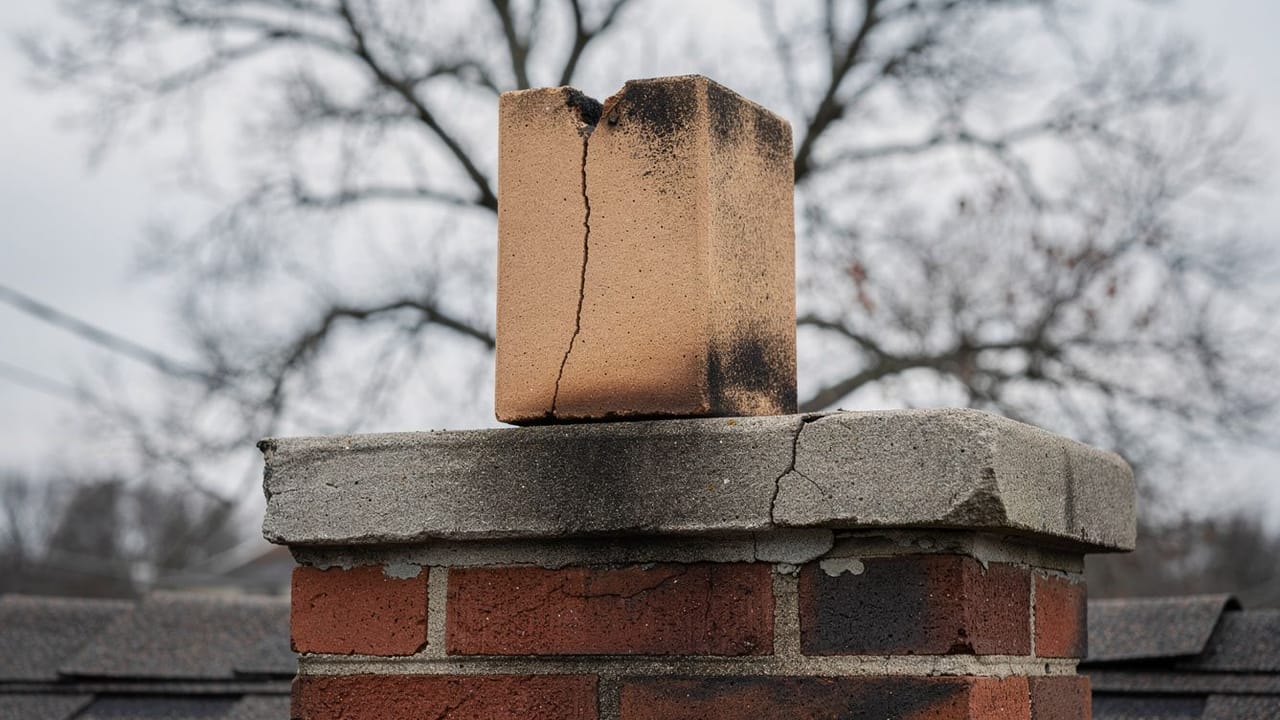
Cracked, spalled or displaced clay tiles found on inspection come first. NFPA 211, as CSIA quotes it, says a liner that has “softened, cracked, or otherwise deteriorated” until it can no longer contain the products of combustion must be removed and replaced, repaired, or relined, so relining is one of three answers and we tell you which one fits. A chimney fire can crack tiles too: the same slides note that flue tiles may crack under a rapid rise or fall in temperature, and that chimney fire temperatures can easily exceed 2,000° F.
Changing the appliance is the other reason. The code says a flue may not be smaller than the appliance’s connector, and an old fireplace flue can be far bigger than a stove needs; in the code’s own tables a 6-inch round flue is 28 square inches and an 8.5 by 13 inch clay flue is 76, more than two and a half times as much. A gas insert follows the code’s separate gas venting rules and the insert maker’s instructions, and CSIA’s Level 2 inspection procedure recommends a full inspection whenever a new appliance goes in or an old one is swapped for a dissimilar one. An unlined chimney being brought into use needs a liner before the first fire, and our liner installation service sizes it to the appliance it will serve.
- Cracked, spalled or displaced clay tiles
- After any chimney fire
- When fitting a stove or gas insert
- Unlined chimney being put into service
- A camera run up the flue is how we check for them
What kind of liner goes in for a stove or insert?
For a wood stove or gas insert, the liners we install are stainless steel, sized to the appliance and insulated where the liner and appliance instructions call for it. The code’s list of acceptable linings includes listed and labeled systems tested to UL 1777, alongside clay tile and other approved materials, and CSIA’s slides count uninsulated liners among the reasons a flue runs too cool. EPA’s guide to choosing wood-burning appliances adds that a certified installer will make sure the flue liner in a masonry chimney is installed correctly.
Clay tile relining is still on that list, and the appliance largely determines what is appropriate. One detail worth knowing: a flue relined with a material outside the code’s general list has to carry a permanent label near where the connector enters, naming the type of appliance and fuel it is for and warning against connecting anything else.
The camera inspection
A liner is hard to judge from the top or the firebox alone, since each shows only part of the flue. CSIA’s Level 2 procedure requires video scanning, or a similar inspection, of the chimney interior and asks the sweep to report any cracks or gaps in the liner. It recommends that level before lining or relining, after a chimney fire, and when a house is being sold.
It is the difference between an inspection and a look, so ask any sweep whether the camera is part of the visit. Our chimney inspection is built around a full-flue camera run, and EPA recommends having the stove, chimney and vents professionally inspected and cleaned every year. When you want one booked, ask us for a free estimate.
Sources
- International Code Council, 2018 International Residential Code, Chapter 10 Chimneys and Fireplaces (as published in the 2018 Seattle Residential Code) — R1003.11 masonry chimneys shall be lined, lining matched to the appliance; R1003.11.1 lining options incl. clay tile and UL 1777 systems; R1003.11.3 gas appliances to Chapter 24; R1003.11.6 relining label; R1003.14 flue not smaller than connector and the 28 and 76 sq in table figures
- Tennessee State Fire Marshal’s Office, Currently Adopted Codes — Tennessee lists the 2018 International Residential Code, with amendments, among its adopted codes
- U.S. EPA Burn Wise, Frequent Questions about Wood-Burning Appliances — Smoke condenses in a cooler chimney as creosote; annual professional inspection and cleaning
- U.S. EPA Burn Wise, Choosing Wood-Burning Appliances — A certified installer makes sure the flue liner in a masonry chimney is installed correctly
- Chimney Safety Institute of America, SOP Level 2 Inspection, Masonry Chimney (rev. 2019) — Level 2 when adding or changing an appliance, before relining, after a chimney fire or at sale; video scanning required; report liner cracks and gaps
- Russ Dimmitt, Chimney Safety Institute of America, Chimney Maintenance and Safety (Northern Arizona University ITEP, 2025) — NFPA 211 (2019) 14.9 on what a liner contains and replace, repair or reline; thermal shock cracks tiles; chimney fires above 2,000° F; oversized flues and uninsulated liners cool the gases
FAQ
When a Chimney Needs Relining, and Why — questions
Does my old chimney need a liner?
If it is unlined and you intend to use it, yes; the residential code says masonry chimneys shall be lined. If it has clay tile, the question is whether the tile is intact, which takes a camera survey of the flue to establish. A cracked or displaced tile lets heat and flue gases out toward the masonry and framing, which is what a liner exists to prevent.
Do I need a new liner for a wood stove insert?
Often. A stove or insert needs a flue no smaller than its connector, and an old fireplace flue can be far larger than that, which lets the gases slow and cool and builds creosote. The insert maker’s instructions say what liner it needs, and EPA expects a certified installer to make sure the flue liner is installed correctly.
How is a liner inspected?
With a camera run up the flue, which is how a Level 2 inspection under the CSIA procedure checks the liner for cracks and gaps. From the firebox and the top alone you see only part of it. Ask whether a camera survey is included, since it is the part that produces the actual information.
How can you tell if your chimney is lined?
Look inside it with a camera. The top of the chimney and the firebox each show only part of the flue, so whether a liner runs the full height, and whether its tiles are intact, takes a video scan. CSIA’s Level 2 procedure requires that scan and asks the sweep to report any cracks or gaps in the liner.