
· by Michael Blair, Nashville's Chimney Sweep
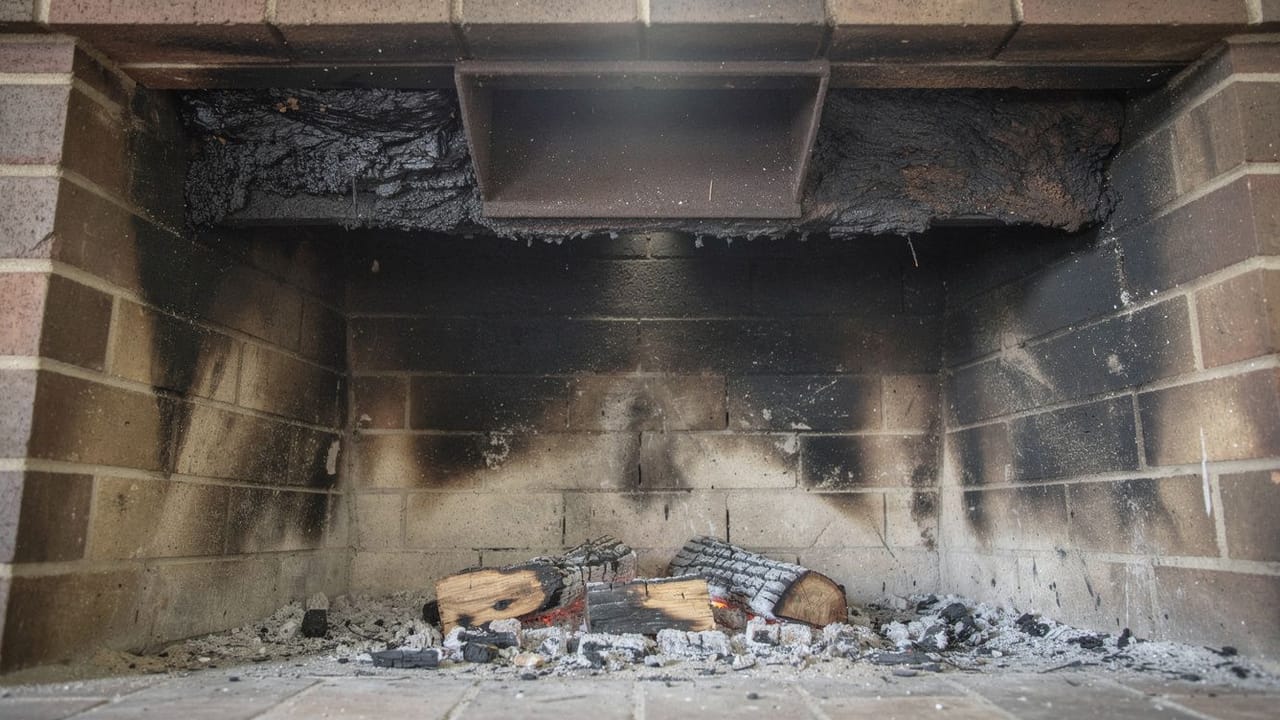
Creosote is wood smoke that cooled before it cleared the chimney. It builds up on the flue wall, and once there is enough of it and the flue gets hot enough, it burns. What makes it comes down to fuel moisture, air supply and flue temperature: Iowa State Extension’s fireplace safety guidance, reprinted by the University of Arizona, says anything that leads to incomplete combustion or a cool chimney increases the problem. Getting it out of the flue is what our chimney sweeping service is for.
The three stages
The stages that decide how much creosote you get happen in the firebox. The same Iowa State guidance describes a wood fire in three. Up to around 500 degrees the heat only dries the wood. Between about 500 and 1,100 degrees the wood breaks down and gives off flammable gases that carry more than half its heat energy. Above about 1,100 degrees those gases and the remaining charcoal finally burn.
Creosote is made from gases that reach the chimney before that third stage has burned them. Once they cool below 250 degrees they condense on the inside of the flue as acids, and as those dry they thicken into a tar-like deposit the guidance calls highly flammable. If the chimney then gets hot enough, the deposit ignites, and that is a chimney fire.
What causes creosote to form?
Wet wood is a leading cause. It spends more of the fire’s heat evaporating water, which lowers the exhaust temperature, and University of Missouri Extension’s guide to cleaning stovepipes and chimneys says plainly that burning well-seasoned wood cuts down on creosote buildup. Shutting the air down for a long, slow burn gets you there by another route: less air means incomplete combustion and a cooler flue, which is why Iowa State tells wood burners to avoid long, slow-burning fires.
Anything else that keeps heat out of the flue works the same way. Missouri Extension singles out high-efficiency stoves, which send less heat up the pipe, as particularly prone to creosote, because it condenses more easily on a cooler surface. For the wood itself, EPA’s Burn Wise program puts the target at 20 percent moisture or less and suggests a moisture meter to check it. What seasoned really means, and how to store wood through a humid summer here, is in our post on firewood.
- Burn dry, seasoned wood at 20 percent moisture or less
- Avoid long, slow fires with the air turned down, overnight included
- A brief hot fire every day or two can help clear small deposits
- A stove that sends little heat up the flue runs it cooler and builds faster
- Check the wood with a moisture meter rather than trusting the word seasoned
How often to sweep
Once a year for a fireplace in regular use, and more often for a wood stove that heats the house. Tennessee’s State Fire Marshal’s Office advises having heating equipment and chimneys inspected every year, and it notes that wood stoves and fireplaces cause less than 10 percent of heating fires but almost 50 percent of heating fire deaths. Iowa State’s rule is to brush the chimney annually, or sooner if the creosote reaches an eighth of an inch, and to check it monthly while you are burning. For a stove, Missouri Extension’s schedule runs from once every couple of weeks to no less than once a year, depending on how hard it is used, the wood and the way it is run.
A chimney used two or three times a winter still wants its annual inspection, because creosote is not the only thing that blocks a flue. Missouri Extension’s own cleaning steps begin with checking the top and bottom for obstructions such as birds’ nests, and our post on birds, squirrels and bats in the chimney covers what moves in over a summer.
What damage does a chimney fire leave behind?
Missouri Extension puts the heat of a chimney fire at up to 2,000 degrees, enough to crack the tile liner of a masonry chimney or warp a metal one, so a cracked liner and warped metal are what we look for afterward. Left unrepaired, cracks and holes in the flue let sparks from an ordinary fire reach the attic or the framing around the chimney. When the liner is cracked, relining the chimney is the repair we usually quote.
A big chimney fire is hard to miss: Iowa State describes a crackling that can build into a roar, and metal vents that may glow red or orange. If it happens, the same guidance says to call the fire department, get everyone out of the house, and close the air inlets while leaving the damper open. After any chimney fire, the guidance is to have the chimney inspected before it goes back into service. If you think yours has had one, ask us for a free estimate before you light the next fire.
Sources
- University of Arizona Cooperative Extension, Backyards & Beyond, Fireplace Safety (adapted from Shawn Shouse, Iowa State University Extension), 2014 — Three stages of a wood fire; gases condense below 250 degrees into flammable creosote; incomplete combustion and cool flues; wet wood; avoid long slow fires; brief hot fires; check monthly, brush annually or at one-eighth inch; signs of a chimney fire and what to do; inspect before reuse
- University of Missouri Extension, G1735 Cleaning Stovepipes and Chimneys — Seasoned wood cuts creosote; high-efficiency stoves prone to buildup on cooler surfaces; cleaning every couple of weeks to once a year; check for birds’ nests; chimney fires up to 2,000 degrees crack tile liners and warp metal; sparks through flue cracks
- U.S. EPA Burn Wise, Health and Safety Awareness Kit sample article — Burn dry, seasoned wood at 20 percent moisture or less; test with a moisture meter; annual inspection and maintenance by a certified professional
- Tennessee State Fire Marshal’s Office, Put a Freeze on Winter Fires This Year (2021) — Inspect heating equipment and chimneys every year; burn only dry, seasoned wood; wood stoves and fireplaces under 10 percent of heating fires, almost 50 percent of heating fire deaths
FAQ
Creosote and Why Chimneys Catch Fire — questions
How often should a chimney be swept?
Any chimney in use should be inspected yearly; both the Tennessee State Fire Marshal’s Office and the EPA advise it. Iowa State Extension’s guidance is to brush it annually, or sooner if creosote reaches an eighth of an inch. A wood stove used as the main heat can need it more often, sometimes in the middle of the season; Missouri Extension’s range runs from every couple of weeks to once a year.
What causes creosote to build up quickly?
Anything that leaves the smoke cool or the fire short of air. Wet wood is a leading cause, because it spends the fire’s heat boiling off water and lowers the exhaust temperature. Turning the air down for a long, slow burn does the same through incomplete combustion. Dry wood burned in brief, hot fires leaves less behind.
How do I know if I have had a chimney fire?
During one you may hear a crackling or a roar in the chimney, and a metal flue can glow red or orange. Afterward, the damage to look for is a cracked tile liner in a masonry chimney or warped metal in a metal one. Either way, have the chimney inspected before it is used again, because a liner damaged by the heat can leave it unsafe.
How much creosote buildup is dangerous?
Iowa State Extension’s rule is to brush the chimney once creosote reaches an eighth of an inch, even if that comes before the annual sweep, and to check it monthly during the burning season. The deposit is tar-like and highly flammable, so any buildup in a flue that gets hot enough can ignite.