
· by Michael Blair, Nashville's Chimney Sweep
The damper is the part of a fireplace nobody thinks about until the handle will not move, the plate will not shut, or a cold draft comes down the chimney all winter. The Chimney Safety Institute of America describes it in its homeowner FAQ as a hinged metal plate or valve that seals the fireplace when it is not in use, and it warns that a damper that is not working, or one left closed when a fire is lit, means a smoky room at best and a fire hazard at worst. This post covers how to tell whether yours is open, why dampers stick, what changes when the fireplace burns gas logs, and what the repair usually looks like. It is part of the work on our fireplace repair page.
Should a fireplace damper be open or closed?
Open, fully, whenever anything is burning, and closed only when the fireplace is cold and out of use. The CSIA homeowner FAQ is specific about the order: open the damper all the way before you light the fire, because once a fire is going it is much harder to open it safely. Reaching into a lit firebox to fight a stiff handle is how people get burned.
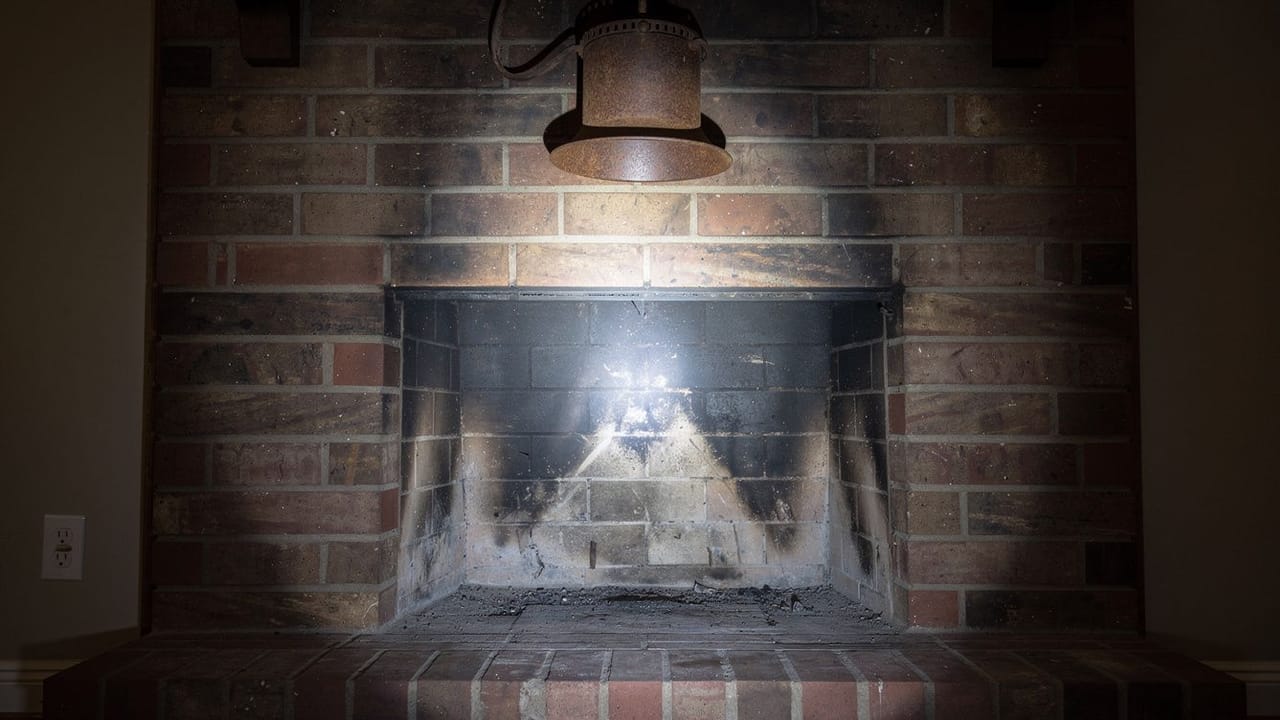
The check takes a few seconds. CSIA advises looking up into the fireplace with a flashlight to confirm the damper is open first. A handle or chain position is not proof, since linkages slip and handles get put back on wrong. What you want to see is the plate standing clear of the opening and a view up into the smoke chamber. If you see a flat metal plate, or the plate looks only partly open, sort that out before the match.
Closing it matters too, once the ashes are cold. An open damper on a fireplace nobody is using leaves a hole in the house straight to the sky, and in a tight house it is often where outdoor air and chimney smell come in.
Why does a damper stick or refuse to close?
Most of the time the plate is fine and something is in its way, or the metal around it has moved. The usual causes are in the list below, and several of them come from the same thing: water. Rain that gets past a missing cap or a cracked crown runs down the flue onto the damper, and a cast-iron throat damper in an older brick fireplace rusts where it sits. After a long humid summer with the fireplace idle, a plate that worked in March can be frozen in place in October.
Forcing it is the wrong move. A rusted hinge or a bent control rod will snap or bend further under a hammer, and a cast-iron frame that has warped from heat will not seal however hard it is pushed shut. If the handle will not move with steady hand pressure, leave it and look up with a flashlight to see whether something is lying on the plate. Soot, creosote flakes, fallen mortar and nesting material from birds and squirrels in the chimney are all common finds. A shop vacuum on a cold firebox will clear loose debris; anything more belongs to a sweep.
CSIA’s carbon monoxide article lists damaged or deteriorating liners, soot build-up, debris-clogged passageways and animal nests among the chimney problems behind venting failures. A damper jammed by debris often means the flue above it needs a look too, which is why a stuck damper usually turns into a chimney inspection rather than a quick adjustment.
- Rust on the plate, the hinge pins or the frame
- Soot, creosote or fallen mortar sitting on the plate or in the frame
- Nesting material dropped down an uncapped flue
- A cast-iron frame warped by years of hot fires
- A bent control rod, a loose handle or a slipped chain
Does a gas log fireplace need the damper open?
Yes. The gas log makers whose manuals we work from say the damper has to be fully open whenever their logs burn, because the logs vent their exhaust up the same chimney a wood fire uses. Hargrove Manufacturing’s burner installation manual puts it in capital letters: the damper must be fully open when operating its gas logs. The Mason-Lite Virginiana burner manual says the same for its log sets, which it requires to burn in a fully vented, non-combustible fireplace with the damper completely open and the chimney clear of obstructions, and it notes that the burners produce carbon monoxide and soot.
Hargrove goes further for its own sets. It includes a damper clamp to hold a minimum permanent opening and keep the blade from closing fully, says any damper must be fixed so that opening stays at all times, and calls for a permanent stop to be installed if the clamp does not fit. That is the maker’s rule for its product, and other log makers set their own; the manual for the set in your fireplace is the one that applies. If your gas logs sit in a fireplace whose damper can still swing shut, that is worth fixing before the next cold snap.
Hargrove also says that if fumes or soot show up in the room with the damper fully open, the fireplace draft is defective and the logs should not be used until it is corrected. A gas fireplace still needs its chimney looked after, which our post on gas fireplace maintenance covers.
Can a fireplace damper be replaced?
Yes, and with a throat damper that has rusted through or warped, replacing it is usually the better repair. Sometimes a clean, a new hinge pin or a straightened control rod gets an old damper working again, and on a fireplace repair visit we try that first. When the plate and frame no longer meet, though, there is no adjustment that makes them seal.
The common replacement does not go in the throat at all. A top-sealing damper mounts on the top of the flue, with a cable run down to a handle in the firebox. CSIA notes in its homeowner FAQ that a tight-sealing top-mounted damper can also reduce air coming down the chimney and the odor that comes with it. Because it sits where a cap would, it is fitted with the same attention to the flue tile and crown that our cap and crown repair work gets.
Smoke or smell from a fireplace nobody is using is not always the damper. CSIA explains that a tight house under negative pressure can pull make-up air down an unused flue, and that some make-up air should come in somewhere else in the house. Newer, tightly built houses are the usual place for it, and our post on smoke coming into the room goes through it. Whether the answer is a new damper, a clamp for gas logs or something in the flue, we price it after we have looked, and you can ask for a written estimate on any of it.
Sources
- Chimney Safety Institute of America, Homeowner Resources FAQ — What a damper does; open it fully before lighting and check with a flashlight; a closed or faulty damper means smoke or fire hazard; top-sealing dampers reduce downdraft and odor; negative pressure pulling air down an unused flue.
- Chimney Safety Institute of America, Avoiding Carbon Monoxide Hazards — Deteriorating liners, soot build-up, debris-clogged passageways and animal nests as chimney problems behind venting failures.
- Hargrove Manufacturing, Stealth gas log burner installation manual (REV 062025) — Hargrove’s rules for its own gas logs: damper fully open when operating, the included damper clamp and permanent free opening, a permanent stop if the clamp does not fit, and no use when fumes show with the damper open.
- Mason-Lite, Virginiana standard burner manual — Mason-Lite’s rule for its log sets: burn only in a fully vented fireplace with the damper completely open; the burners produce carbon monoxide and soot.
FAQ
A Stuck Fireplace Damper: What to Check First — questions
How do I fix a stuck fireplace damper?
With the fireplace cold, try steady hand pressure on the handle, then look up with a flashlight for soot, mortar or nesting material on the plate. Loose debris can be vacuumed out. Do not hammer a rusted hinge or bent rod; if it still will not move, the damper and the flue above it need a sweep to look.
How do I know if my fireplace damper is open?
Look up into the fireplace with a flashlight, which is what the Chimney Safety Institute of America advises before every fire. An open damper shows the plate standing clear and a view into the smoke chamber. A flat metal plate across the opening means it is closed, whatever the handle position suggests.
What is a damper clamp on gas logs?
It is a part some gas log makers supply to hold the damper blade partly open so it can never close fully while their logs are installed. Hargrove Manufacturing includes one with its burners and calls for a permanent stop if the clamp does not fit. The manual for your own log set says what it requires.
Why will my fireplace damper not close all the way?
Usually rust on the hinge or frame, debris sitting in the frame, a bent control rod, or a cast-iron frame warped by heat. A gas log clamp also stops it closing on purpose. Debris can be cleared, but a warped frame will not seal again, and that damper is normally replaced with a top-sealing one.
Should a fireplace damper be open or closed?
Fully open whenever anything is burning, and opened before the fire is lit, since it is much harder to open safely once a fire is going. Close it only after the fire is out and the ashes are cold. With gas logs, follow the log maker’s manual, which typically requires it open or clamped open.