
· by Michael Blair, Nashville's Chimney Sweep
Gas fireplaces leave no creosote in the flue, which leads a lot of people to decide they need nothing at all. They still burn fuel and push combustion products somewhere, and the EPA’s introduction to indoor air quality counts fuel-burning combustion appliances among the sources of pollution inside a home. What goes wrong with a gas unit is quieter than a smoky wood fire, so we put it on the same yearly schedule as a wood-burning chimney, and a gas fireplace that vents up a masonry flue still gets the flue looked at, as our post on what a chimney inspection covers explains.
What a service covers
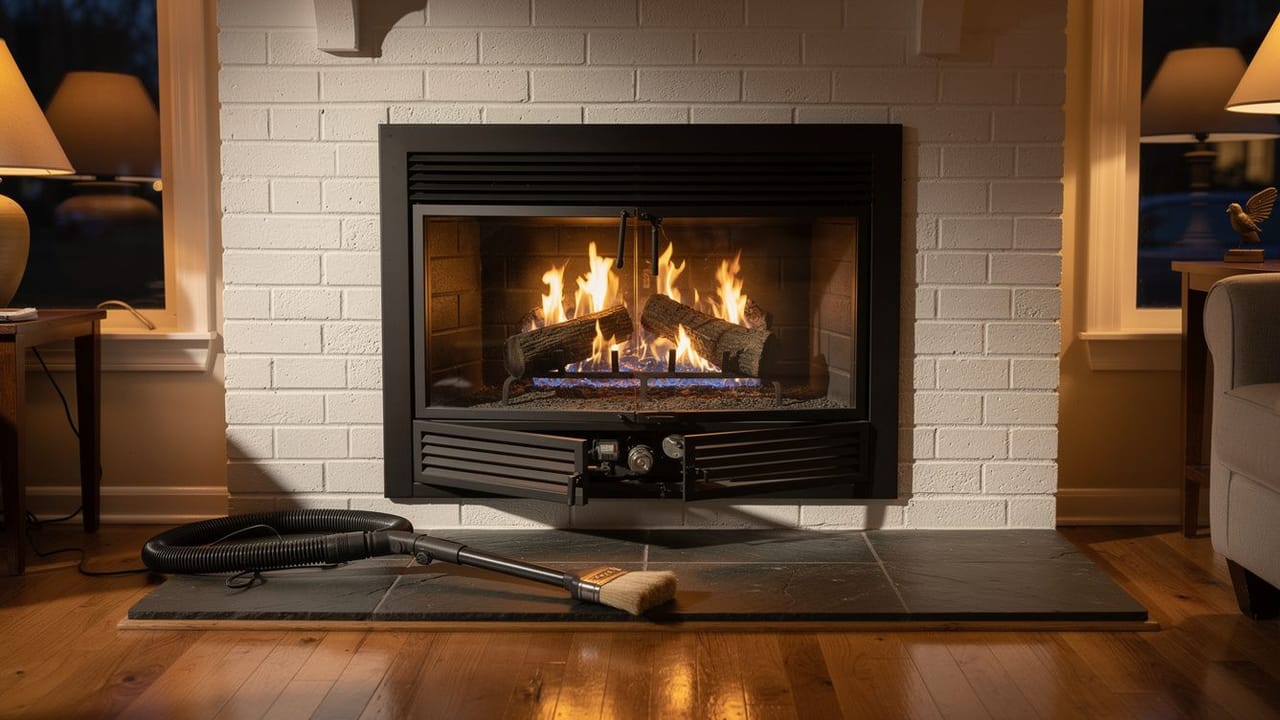
The manufacturers ask for it. Quadra-Fire’s installer’s guide for its QV36D direct-vent fireplace says the appliance and its venting should be inspected before first use and at least annually by a professional, with a check-up at the beginning of each heating season, and it spells out the jobs: inspect the vent cap and the whole vent run, brush or vacuum the burner and control compartment, and keep the burners and air passages clean. On a gas fireplace service call we shut the gas off first, then check the venting, clean the burner, the pilot assembly and its air holes, watch the flame with the unit running, and make sure the glass on a direct-vent unit is seated and sealed.
The flame tells you a lot, though yellow is not the warning sign many owners take it for. On a log set some yellow is the point. Hearth Technologies’ owner’s manual for the i30SE insert says the flame should be blue with yellow tips, steady rather than lifting or floating, and that flames which start out blue should turn yellow within 15 to 30 minutes. Superior’s manual for its NF18 and NF24 vent-free logs describes a proper flame as bright yellow with blue at the base, and an improper one as mostly yellow or orange and 2 inches tall or more. Flames lifting off the burner, soot on the glass, or a fire that looks different from last winter are what we want to see in person. Your own model’s manual has its own description, and it is worth five minutes.
What usually goes wrong with a gas fireplace?
Most of it is dirt in small places. The Superior manual says a yellow tip on the pilot flame may mean dust and dirt in the pilot assembly, that blocked burner holes and air inlets make soot, and that lint from carpet, bedding and pet hair can call for cleaning more often than once a year. When a pilot is slow to light, the pilot assembly is the first thing we clean and check.
Outside, the vent cap has to stay clear. Quadra-Fire asks owners to look at the external cap regularly so nothing interferes with the air flow, and its troubleshooting table traces a flame that burns blue and lifts off the burner to a shortage of oxygen: a cap that is blocked or badly installed, leaking vent joints, or glass that is not tightened at the top corners. That last one is why the glass gets our attention on a sealed unit, since the same guide says the glass door assembly must be in place and sealed before the fireplace is run.
- A check-up at the start of each heating season
- Vent cap and vent run checked for debris and leaks
- Burner, pilot and air holes cleaned of dust and lint
- Glass seated and sealed on direct-vent units
- A working carbon monoxide alarm on every level
Carbon monoxide
Any appliance that burns gas can make carbon monoxide when combustion or venting goes wrong, and the EPA’s page on carbon monoxide calls it an odorless, colorless and toxic gas, so a gas fire gives you none of the smoke a failing wood fire would. The same page lists back-drafting from fireplaces among the household sources and says to keep gas appliances properly adjusted. The early symptoms are easy to shrug off: the Superior manual compares them to the flu, with headaches, dizziness or nausea, and says to get fresh air at once and have the fireplace serviced.
The EPA page quotes the Consumer Product Safety Commission recommending a carbon monoxide alarm on each level of the home, outside each sleeping area. The Tennessee State Fire Marshal’s Office gives the same placement, suggests interconnecting the alarms so they all sound together, and advises a professional inspection of fuel-burning heating equipment and chimneys every year before cold weather sets in. If an alarm does go off, its advice is to get outdoors or to an open window or door, account for everyone in the house, and call for help from the fresh air.
Do vent-free gas logs need outside venting?
Vent-free log sets burn in the room, and the Superior manual says plainly that its set requires no outside venting. The same manual notes that state and local codes in some areas prohibit vent-free appliances, rules out bedrooms and bathrooms unless the set is run vented, and warns that these units add moisture to the air, which can bring on mildew in a room without enough ventilation.
Room size matters more with one of these. The manual treats a space as confined when it has less than 50 cubic feet for every 1,000 Btu per hour of appliance input, calls for extra fresh air in tightly built houses, and fits the pilot with an oxygen depletion sensor that shuts the set off when fresh air runs short. If you have one, we check the room against the unit’s input rating, and a carbon monoxide alarm nearby matters more rather than less. Check what your local code allows before adding one, and ask us for a free estimate if you want an existing set looked at.
Sources
- EPA, Introduction to Indoor Air Quality — Fuel-burning combustion appliances are a source of indoor pollution
- Quadra-Fire (Hearth & Home Technologies), QV36D-A Installer’s Guide — Inspect appliance and venting before first use and at least annually; check-up each heating season; vent cap free of debris; lifting flame from insufficient oxygen; glass must be sealed and tightened at the corners (2003 manual)
- Hearth Technologies, i30SE Direct Vent Gas Fireplace Insert Owner’s Manual — Flame blue with yellow tips, steady, not lifting; flames turn yellow within 15 to 30 minutes
- Superior Fireplaces (IHP), Vent-Free Gas Logs NF18/NF24 Manual, 2025 — Proper and improper flame; yellow pilot tip from dust; lint; flu-like CO symptoms; no outside venting; codes in some areas prohibit vent-free; no bedrooms or bathrooms unless vented; moisture and mildew; confined space under 50 cubic feet per 1,000 Btu/hr; oxygen depletion sensor
- EPA, Carbon Monoxide’s Impact on Indoor Air Quality — Odorless, colorless and toxic; back-drafting from fireplaces; keep gas appliances adjusted; CPSC recommends an alarm on each level outside each sleeping area
- Tennessee State Fire Marshal’s Office, Carbon Monoxide Awareness Day safety tips, 2018 — Alarms outside each sleeping area and on every level, interconnected; yearly inspection before cold weather; what to do when an alarm sounds
FAQ
Gas Fireplaces Need Servicing Too — questions
Does a gas fireplace need annual servicing?
Yes. It leaves no creosote, but it still burns fuel and vents combustion products. Manufacturers such as Quadra-Fire call for a professional inspection before first use and at least once a year, with a check-up at the start of each heating season, and the Tennessee State Fire Marshal’s Office recommends a yearly inspection of fuel-burning heating equipment before cold weather sets in.
Why is my gas fireplace flame yellow and lazy?
Some yellow is normal. Manufacturers’ manuals describe a healthy log-set flame as blue at the base with yellow above it, and flames often start blue and turn yellow after 15 to 30 minutes. What needs attention is a flame that is mostly yellow or orange and taller than your manual describes, flames that lift off the burner, or soot building up on the glass. Dust in the pilot or burner air holes, debris at the burner opening and a short supply of air are among the causes the manuals list. Compare it with your model’s manual and have it looked at if it does not match.
Do I need a carbon monoxide alarm with a gas fireplace?
Safety agencies recommend one. The Consumer Product Safety Commission, as quoted by the EPA, recommends a carbon monoxide alarm on each level of the home outside each sleeping area, and the Tennessee State Fire Marshal’s Office gives the same advice. Carbon monoxide has no color or smell and a gas fire makes no smoke, so an alarm is the practical warning that combustion or venting has gone wrong. Install it following the manufacturer’s instructions.
What is included in a gas fireplace cleaning and inspection?
On our visits we shut the gas off, check the vent cap and the whole vent run for debris and leaks, and clean the burner, the pilot assembly and its air holes. Then we run the unit and watch the flame. On a direct-vent fireplace we also make sure the glass is seated and sealed.