
· by Michael Blair, Nashville's Chimney Sweep
A wood fire in an open fireplace depends on the chimney drawing air up and out faster than the fire makes smoke. When it does not, smoke spills into the room, sets off the detector and leaves the house smelling of it for days. Some causes are about how the fire was started and are fixed in a minute. Some are about the house and the flue and are fixed with a part or a change in habit. And a few are about the chimney itself and need someone to look inside it. The pattern of when it smokes tells you which.
Only at the start: a cold flue
A chimney on an exterior wall in January is full of cold, dense air. Light a fire under it and the smoke has to push that cold plug up and out before the draft establishes; until it does, smoke takes the easier path into the room. This is the most common cause, and the sign is that the fireplace smokes for the first few minutes and then draws fine.
Priming the flue fixes it: hold a rolled, lit newspaper up near the damper for a minute until you feel the air reverse and start to pull, then light the fire. Opening the damper fully, using dry kindling that catches fast, and building the fire toward the back of the firebox all help. A fire started with a top-down stack, kindling on top of the logs, produces less smoke while the flue warms.
All the time: the house is starving it
A chimney needs replacement air. In a tight house, or one where the range hood, the dryer or a bathroom fan is running, the house is at a slight negative pressure and the chimney becomes the easiest path for air to come in, which pushes the smoke down. Newer Nashville houses and older ones that have been air sealed are both prone to it. The tell is a fire that smokes whenever the kitchen fan is on, or that draws better with a window cracked.
Cracking a window in the same room takes the pressure off. A permanent fix is a dedicated outside air supply to the firebox, which some fireplaces have a provision for. A fireplace in a basement or a lower level fights the whole house’s stack effect, which pulls air up and out of the upper floors and down the chimney to replace it; those fireplaces often need the outside air supply to work at all.
- Smokes at the start, then fine: cold flue, prime it
- Smokes when a fan runs or in a tight house: makeup air
- Smokes in some winds only: cap, chimney height or a nearby roof
- Smokes always, regardless: flue size, blockage or damper
The flue is too small or the opening too big
An open fireplace needs a flue sized to its opening. The traditional rule of thumb puts the flue area at about a tenth of the fireplace opening, and a fireplace built or remodeled with an oversized opening, or a chimney relined with a liner smaller than the original flue, often falls below that. The result is a fireplace that never draws well no matter how the fire is built.
The fixes are to shrink the opening or to increase the draft. A smoke guard, a metal strip across the top of the opening, reduces the opening height and often solves it outright. Glass doors partly closed do the same. A taller chimney, a different cap or a draft-inducing fan at the top are the more involved options.
Something in the way, or the chimney itself
A fireplace that smoked fine last year and smokes this year has usually gained an obstruction: a bird nest, a fallen piece of flue tile, a cap clogged with creosote, or a damper that is not opening fully because a part has rusted or a piece of mortar is in the track. A chimney that has never drawn well may be too short relative to the roof or the trees around it, so wind rolls over the top and down the flue. Smoke that comes in only on windy days from one direction points to that.
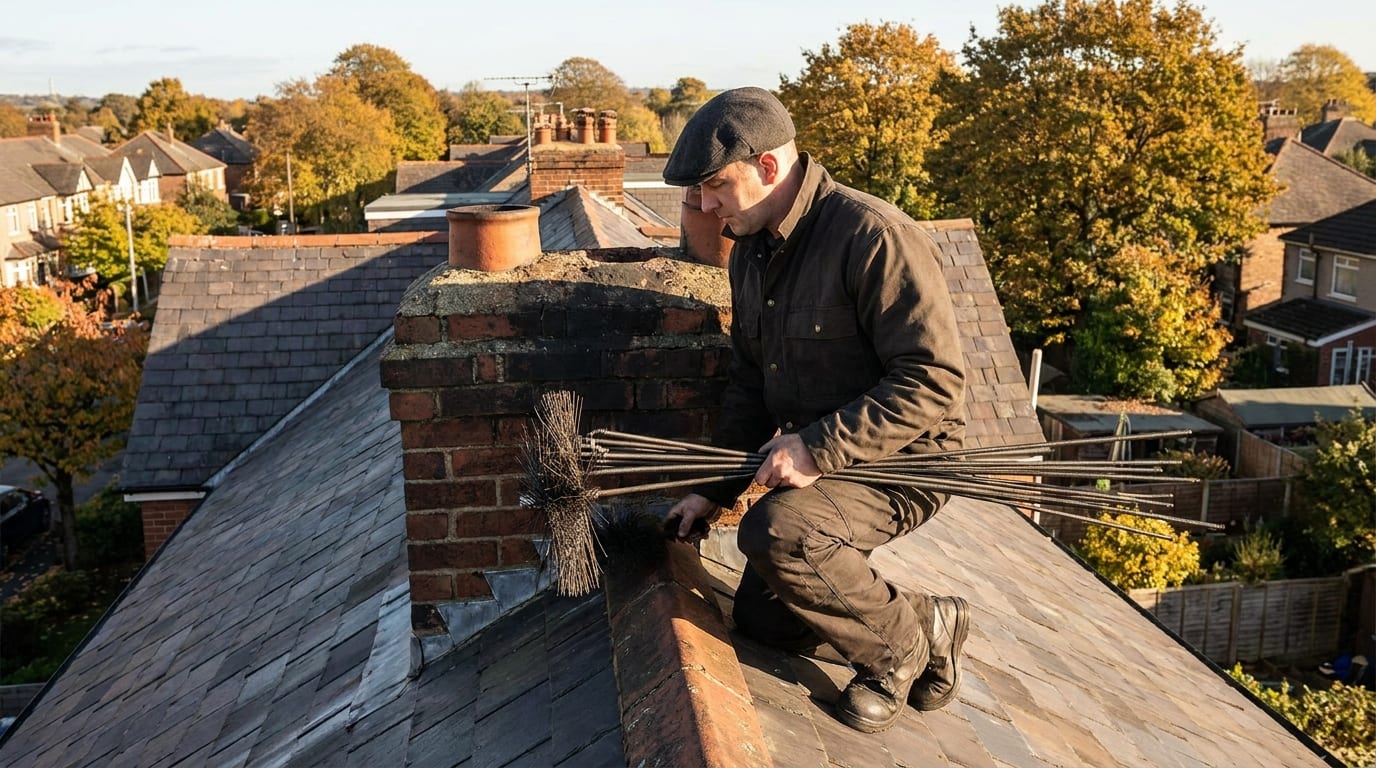
These are what a chimney sweep looks for in an inspection, with a camera up the flue. A chimney that smokes and has not been inspected in years needs that before the next fire, because the same obstruction that causes the smoke can also be the creosote buildup that causes a flue fire.