
· by Michael Blair, Nashville's Chimney Sweep
An open masonry fireplace burns air taken from the room, and the EPA’s Burn Wise page on energy efficiency warns that fireplace drafts can pull the warm air up the chimney, leaving other rooms cooler. The same page calls a wood-burning fireplace a very inefficient way to heat a home. If you want the fireplace to warm the house and not only the chairs pulled up to it, an insert or a stove is the change, and the flue it will vent into is the first thing we look at during a chimney inspection.
Why do open fireplaces lose heat?
Combustion needs air, and an open fire takes it from the room. The Department of Energy’s building science guidance on fireplace and stove ventilation explains that natural-draft appliances draw all or some of their combustion air from the indoor space, which is air you have already paid to heat. Whatever goes up the flue has to be made up by outside air coming in through the gaps in the house.
None of that spoils the fire as something to sit beside. As a heater, though, it works against the furnace: the EPA says that if you run central heat while burning in a fireplace, the heater will work harder to hold the temperature through the house. It also puts the smoke from a fireplace at 20 times the air pollution of an EPA-certified wood heater.
Inserts and stoves
A closed appliance with a door on the firebox is a different machine. The EPA lists an EPA-certified stove as up to 50% more energy efficient, burning a third less wood for the same heat, with less creosote build-up and a lower risk of chimney fires. When you compare models, look at overall efficiency, the share of the heat that actually reaches the room. The EPA cautions that an advertised figure is often combustion efficiency, and that the overall number may be 10 to 20 percent lower.
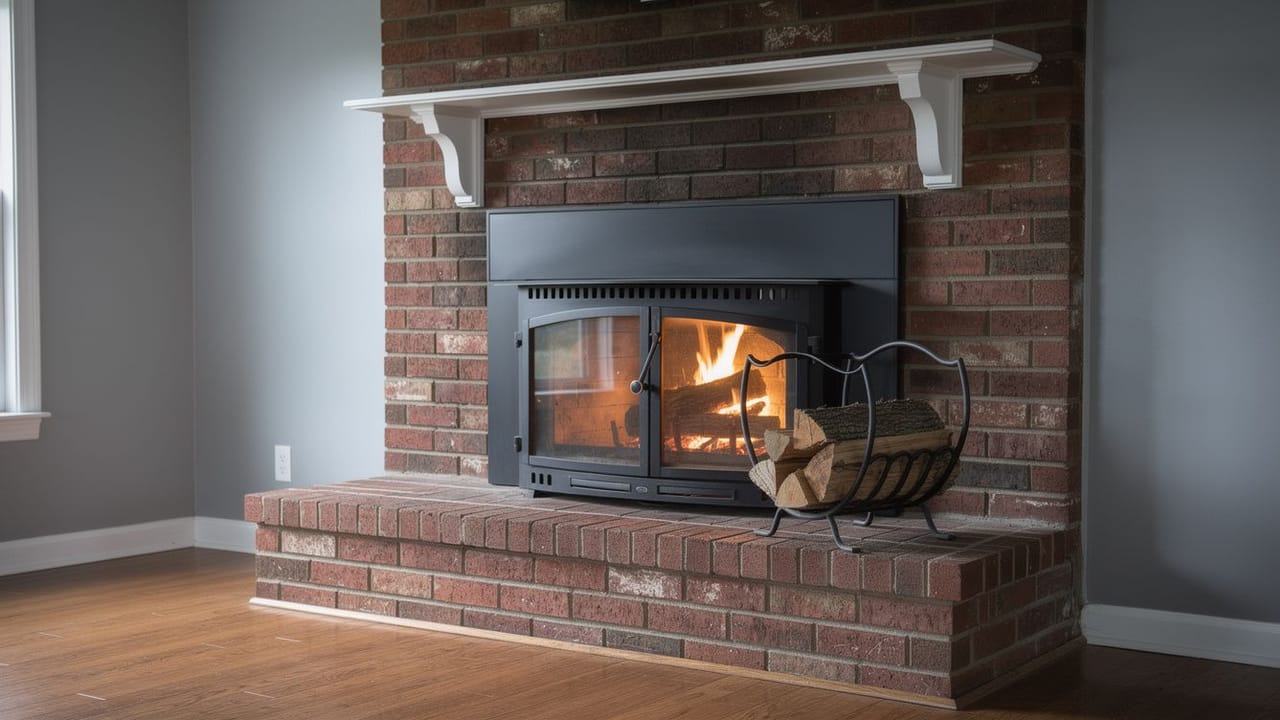
An insert goes inside the fireplace you already have. The EPA’s guide to choosing wood-burning appliances describes inserts as designed to sit within the firebox of an existing masonry or metal fireplace, and as similar in function and performance to freestanding wood stoves, so the choice between the two comes down mostly to the room. A freestanding stove takes up floor space; an insert uses the opening that is already there. If your fireplace is factory-built, the kind sold as zero-clearance, the EPA says the insert has to be one designed and tested for that unit.
- Open fireplace: pleasant, and in the EPA’s words a very inefficient heater
- Insert: fits inside the existing firebox, performs much like a stove
- Freestanding stove: similar performance, needs its own floor space
- Gas stove or insert: little maintenance, vents through the chimney or out through a wall or roof
- Wood insert in a masonry chimney: the flue liner has to be installed correctly
What does installing a wood insert involve?
For a wood insert in a masonry chimney, the EPA says a certified installer will make sure the flue liner is installed correctly. We run a camera up the existing flue before quoting, and where it needs one, relining the chimney becomes part of the job; our post on when a chimney needs relining explains how we make that call. A gas unit can skip the old flue altogether, since the EPA notes that gas stoves can vent through an existing chimney or directly through the roof or the wall behind the stove. Clearances and the hearth we set to whatever the appliance’s installation manual specifies.
It is permitted work. In Davidson County, Metro Codes’ list of projects that require a permit marks a fireplace insert and a wood stove as needing a gas/mechanical permit, and a new chimney flue or liner as needing a permit as well. That list dates from 2022, so check it against Metro Codes before work starts; Metro’s 2025 building permit fee schedule sets the minimum gas/mechanical permit fee at $75 and counts a factory-built fireplace or insert and a solid-fuel stove each as one appliance. Outside Metro, the State Fire Marshal’s Office list of currently adopted codes shows Tennessee on the 2018 International Residential Code and the 2021 International Mechanical Code, each with amendments, and a city or county with its own codes office may work from a different edition. We would not skip the inspection either way, because it is a second look at the liner, the connection and the clearances before the first fire.
How can an open fireplace waste less heat?
Glass doors and outside air both help. The DOE guidance for a natural-draft fireplace calls for tight-fitting glass doors across the opening and a dedicated duct that brings outside air straight into the firebox, and it recommends combustion safety testing so that exhaust fans elsewhere in the house cannot backdraft the fireplace. A damper that seals when the fire is out matters too, and checking that it closes all the way is part of our fireplace repair work.
For a fireplace you never light, we suggest closing the damper and fitting an inflatable chimney balloon or a plug in the throat, which shuts the flue off until you want it again. If you are weighing an insert against a stove, or want to know what your chimney would need for either, ask us for a free estimate.
Sources
- U.S. EPA Burn Wise, Burn Wise Energy Efficiency — Wood-burning fireplaces very inefficient; drafts pull warm air up the chimney; central heat works harder; 20 times the pollution of certified heaters; certified stoves up to 50% more efficient and use 1/3 less wood; overall vs combustion efficiency, 10 to 20 percent lower
- U.S. EPA Burn Wise, Choosing Appliances — Inserts sit within an existing firebox and perform like freestanding stoves; certified installer checks the masonry flue liner; zero-clearance fireplaces need a matched insert; gas stoves need little maintenance and vent through a chimney, roof or wall
- U.S. DOE Building Science Education Solution Center, HVAC: Proper Ventilation for Fireplaces and Stoves — Natural-draft appliances take combustion air from the indoor space; tight-fitting glass doors; dedicated outside combustion air duct; combustion safety testing against backdrafting
- Metro Nashville Codes & Building Safety, List of Building Projects Which May or May Not Require a Permit (2022-09) — Fireplace insert and wood stove need a gas/mechanical permit; a new chimney flue or liner needs a permit. Dated 2022
- Metro Nashville Codes, Building Permit Fee Schedule 2025 — Gas/mechanical permit minimum fee $75; factory-built fireplace or insert and solid-fuel stove each counted as one appliance
- Tennessee State Fire Marshal’s Office, Currently Adopted Codes (updated 2025-04-17) — State adoption of the 2018 International Residential Code and 2021 International Mechanical Code, with amendments
FAQ
Wood Stove, Insert or Open Fireplace — questions
Does an open fireplace actually heat a room?
You feel its warmth sitting close to it, but the EPA calls a wood-burning fireplace a very inefficient way to heat a home. Fireplace drafts can pull warm air up the chimney and leave other rooms cooler, and if the furnace is running at the same time, the EPA says it will work harder to keep the house at temperature. The pleasure of an open fire is real; as a way to heat the house it is a poor one.
Is a fireplace insert worth installing?
For most people who want the fireplace to heat the room, yes. The EPA describes inserts as similar in function and performance to freestanding wood stoves, and it lists EPA-certified stoves as up to 50 percent more energy efficient, using a third less wood for the same heat. A wood insert in a masonry chimney needs its flue liner installed correctly, and in Davidson County it needs a gas/mechanical permit from Metro Codes.
What should I do with a fireplace I never use?
Make sure the damper closes fully, and consider an inflatable chimney balloon or a fitted plug to close off the flue. An open damper on a fireplace nobody lights leaves a path from the living room to the outdoors all year. While you are at it, have the top of the chimney looked at, and if there is no cap, ask about one.
Are wood stoves safer than fireplaces?
Certified ones can be: the EPA credits EPA-certified stoves with less creosote build-up and a lower risk of chimney fires, and they burn a third less wood for the same heat. Safety still depends on the installation, meaning a correctly installed flue liner, clearances and hearth set from the appliance manual, and an inspection before the first fire.