
· by Michael Blair, Nashville's Chimney Sweep
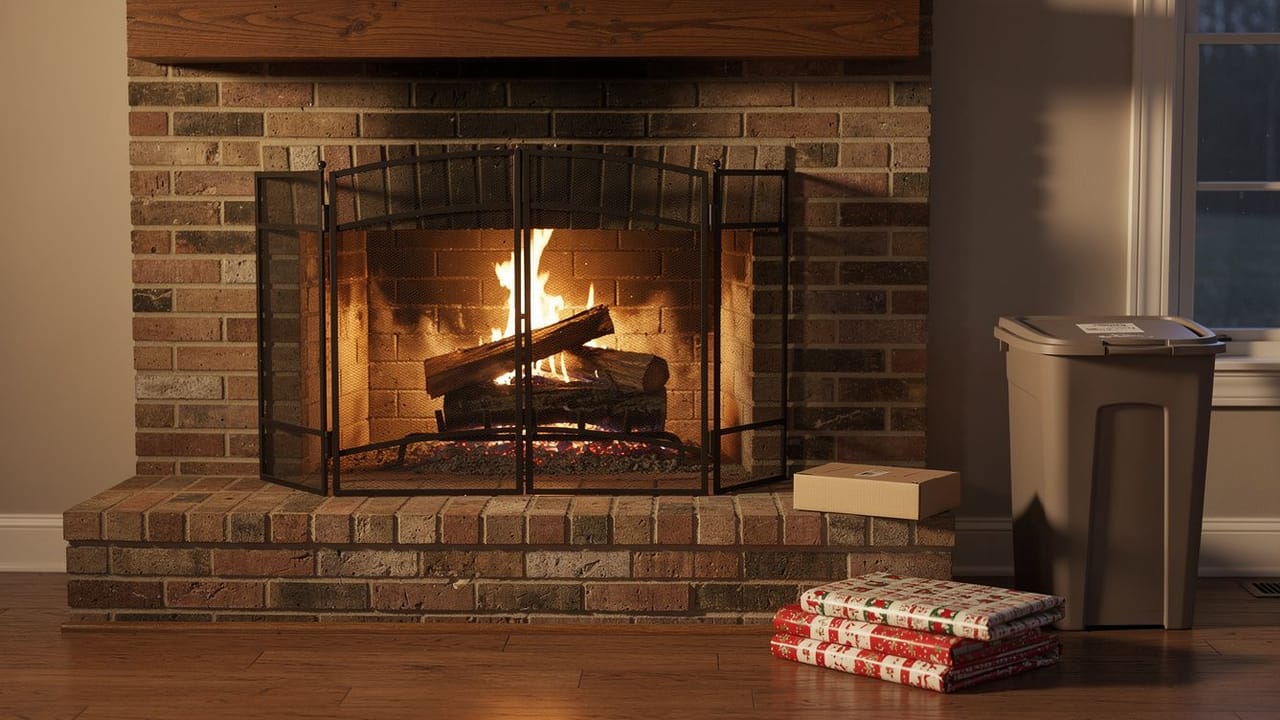
Between Thanksgiving and New Year’s, the fireplace gets lit for family and company, and it is also when things land in it that were never meant to be fuel. The box the gift came in, the wrapping paper from the floor, the tree when it comes down.
It feels like tidying up. For the chimney, each of those is a different problem, and the agencies that study home fires and wood smoke have been specific about them.
Can you burn wrapping paper in a fireplace?
No. The U.S. Consumer Product Safety Commission’s holiday decorating warning tells households not to burn wrapping paper or plastic in the fireplace, because those materials can catch all at once and burn hard enough to cause a flash fire. The same notice calls for a screen in front of the fireplace so sparks do not reach anything nearby.
The trouble is how fast it goes. A split log burns down slowly from its surface. A crumpled pile of thin paper and plastic film catches everywhere at once, which is the sudden, intense burn the CPSC is describing, and the screen is what stands between that flare and the room.
Wrapping paper belongs in the trash or the recycling, depending on what it is made of. The firebox is not a shortcut for either.
Is it safe to burn cardboard in a fireplace?
No, and the EPA names it outright. The Burn Wise guide to best wood-burning practices puts household trash at the top of its list of what not to burn. Under that heading it names cardboard, plastic, foam, and the printed color on magazines, packaging and wrappers. Burning any of it, the agency warns, can give off toxic fumes and harm the stove or fireplace itself.
That covers most of what piles up during the holidays: shipping boxes, gift boxes, packing foam, glossy catalogs and the plastic film around everything. A small twist of plain newspaper under the kindling to start a fire is a different thing from feeding boxes into it.
If the fireplace is a wood stove or an insert, the warning about damage is worth taking literally. Those appliances are built around a fuel, and the fuel is seasoned wood.
Can you burn a Christmas tree in the fireplace?
No. Iowa State University Extension’s horticulture staff answer this directly in their Christmas tree FAQ: do not burn the tree in a fireplace or a wood stove, because dry evergreen branches flare violently when they burn and could start a house fire, and burning the tree can add to creosote in the flue.
Creosote is the part we see. It is the deposit that lines a flue when smoke cools on the way up, and it is the fuel in a chimney fire, as our post on creosote and chimney fires explains. Anything that adds to that lining shortens the time until the flue needs sweeping.
The CPSC’s advice about the tree runs the other way too: set it up away from the fireplace and other heat sources while it is still in the house.
Treated, painted and glued wood
Wood that is not plain firewood stays out as well. The EPA’s Burn Wise list includes coated, painted and pressure-treated wood, plywood, particle board and any wood with glue on or in it, along with ocean driftwood. Leftover deck boards, an old painted shelf, scraps of plywood from a holiday project and offcuts of trim all fall into that list.
The same list also names wet, rotted, diseased or moldy wood. Our post on firewood that will not wreck your chimney covers what seasoned wood is and how to store it in a humid Middle Tennessee winter.
One more holiday item: the CPSC notes that fire salts, the packets that color flames, contain heavy metals that cause intense stomach irritation and vomiting if eaten, so they are kept away from children. If the fireplace has had a heavy season or something went in that should not have, a chimney sweeping before the next run of fires is the place to start. We work across the area, including chimney sweeps in Franklin, and you can ask us to look at your chimney.
Sources
- U.S. EPA Burn Wise, Best Wood-Burning Practices — What not to burn: household trash including cardboard, plastics, foam and colored ink on magazines, boxes and wrappers; coated, painted and pressure-treated wood; ocean driftwood, plywood, particle board and glued wood; wet, rotted, diseased or moldy wood; these can release toxic or harmful chemicals and may damage the appliance.
- U.S. Consumer Product Safety Commission, CPSC Warns: Avoid Hazards Related to Holiday Decorating (2008) — Do not burn wrapping paper or plastic in the fireplace; they can ignite suddenly and burn intensely, causing a flash fire; use a fireplace screen; fire salts contain heavy metals; place trees away from fireplaces.
- Iowa State University Extension and Outreach, Yard and Garden: After the holidays, can I burn my Christmas tree in the fireplace? — Do not burn the tree in a fireplace or wood stove; dry evergreen branches burn explosively and could cause a house fire; burning the tree may add creosote and lead to a flue fire.
FAQ
What Not to Burn in a Fireplace This Holiday — questions
Why shouldn’t you burn household trash in a fireplace?
The EPA’s Burn Wise program puts household trash on its list of things not to burn, naming cardboard, plastic, foam and the colored printing on magazines, packaging and wrappers. The agency says burning them can give off toxic fumes and harm the fireplace or stove. Seasoned firewood is the fuel those appliances are built for.
Can you burn plywood in a fireplace?
No. The EPA’s Burn Wise list of what not to burn includes plywood, particle board and any wood with glue on or in it, as well as coated, painted and pressure-treated wood. Leftover project scraps go in the trash or to the dump, not into the firebox, however dry they are.
Is it safe to burn pressure treated wood?
Not in a fireplace or wood stove. The EPA lists pressure-treated wood, with coated and painted wood, on its list of things that give off toxic fumes in a fire and can harm the stove or fireplace. Leftover deck lumber goes out with construction debris instead.
Are fire color crystals safe to use?
Use them with care. The Consumer Product Safety Commission says fire salts, which color the flames, contain heavy metals that can cause intense gastrointestinal irritation and vomiting if swallowed. It advises keeping them away from children, so packets are stored somewhere other than the hearth.
Can you burn driftwood in a fireplace?
The EPA says not to burn ocean driftwood, listing it alongside plywood, particle board and glued wood among materials that can release harmful chemicals and damage the appliance. Wood from a lake or river bank is fuel only if it is dry and sound, since the same list rules out wet or rotted wood.