
· by Michael Blair, Nashville's Chimney Sweep
A pilot that catches, burns for a few seconds and then goes out is frustrating, especially on the first cold evening of the year. It is also the appliance protecting the house: the valve will not keep gas flowing unless it is sure there is a flame to burn it.
That makes the fault easier to find than it seems, because the question is always the same. Why does the valve think the pilot is out? Here is what the manufacturers’ own manuals list, what is safe to check yourself, and where our fireplace repair work picks up.
Why won’t a gas fireplace pilot stay lit?
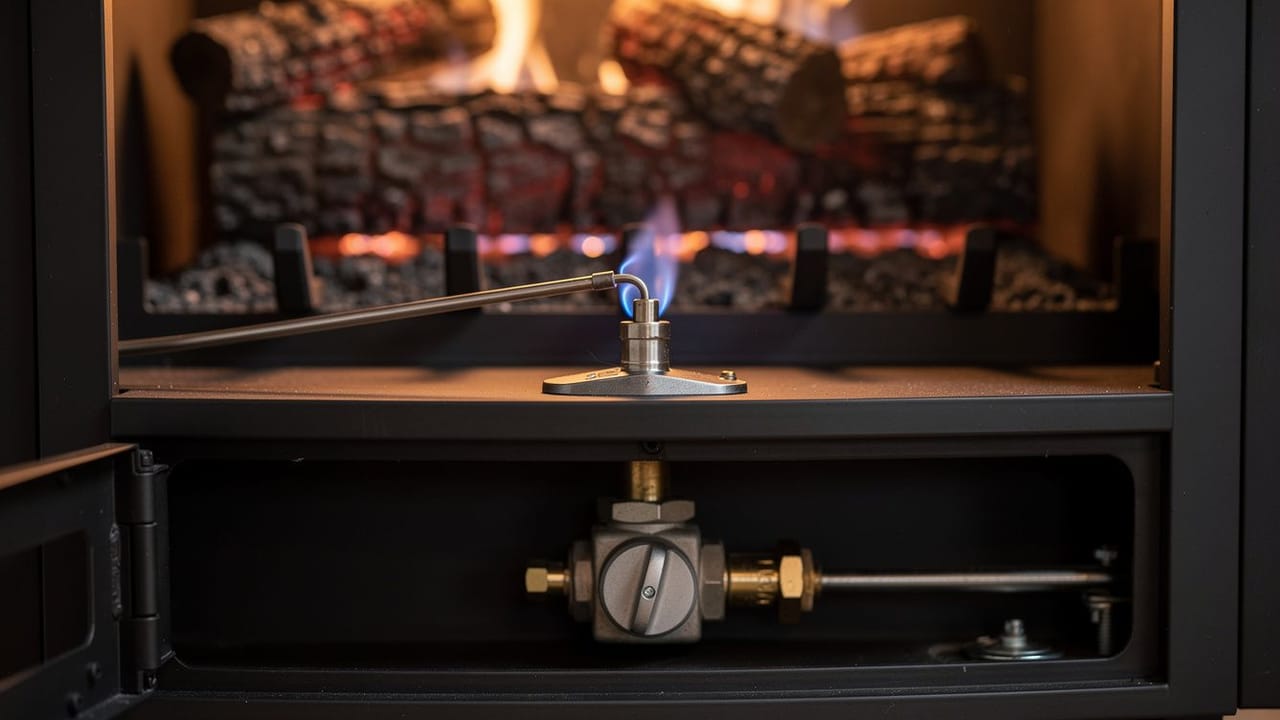
A gas fireplace pilot will not stay lit when the sensor beside it stops getting hot enough to hold the gas valve open. On most units that sensor is a thermocouple, a thin metal rod whose tip sits in the pilot flame and makes a tiny voltage while it is hot. Superior’s manual for its vent-free gas logs explains the chain plainly: a pilot flame that is not touching the thermocouple lets it cool, and once it cools the heater shuts down.
So nearly every cause comes back to heat at the sensor or gas at the pilot:
- A pilot flame bent away from the thermocouple, or weak and yellow from dirt
- A thermocouple that is worn and no longer makes enough voltage
- A loose or overtightened connection where the thermocouple meets the valve
- Gas pressure that is too low to feed a full pilot flame
- On vent-free logs, the oxygen depletion sensor shutting the unit off
Can dust in the pilot assembly put the flame out?
Dust in the pilot assembly can starve the flame enough that it stops heating the sensor properly. In the Superior manual, a pilot flame with a yellow tip is read as a likely sign of dirt inside the pilot assembly, and it shows a tiny air inlet hole near where the flame comes out. Lint from carpet and bedding and pet hair are named as reasons a fireplace may need cleaning more often.
Its cleaning steps are specific: shut the unit and pilot off, let it cool for at least thirty minutes, then blow the burner, pilot and air holes clear with compressed air at no more than 30 PSI, following the can’s directions so the pilot is not damaged. It asks for the air holes to be cleaned before each heating season and for a qualified service person to inspect the heater every year.
A fireplace that sat idle all summer in a Middle Tennessee house is a fair candidate for this, since the manual notes that a pilot may need extra cleaning depending on how much or how little it has been used. That is part of why we clean the pilot assembly on every gas fireplace service visit before we measure anything.
How is a fireplace thermocouple tested?
A thermocouple is tested with a digital multimeter set to millivolts while the pilot burns, and the reading is compared with the figure in that fireplace’s manual. European Home’s troubleshooting guide for its Gas Stones fireplaces covers the case where the pilot is lit, the sparking stops and the valve shuts off within a minute: it says to measure at the thermocouple connection and expect 21 to 30 millivolts. Its remedies, in order, are replacing the thermocouple, confirming the inlet pressure and regulator, and replacing the valve, with a warning not to overtighten the thermocouple.
That is the test we run on a service call, after the pilot is clean. The number belongs to that valve. Other manufacturers publish their own minimum, and some fireplaces use a thermopile with a much higher output, so the manual for your model is the one that counts.
Pressure is the other half. Superior’s service hints say that when gas pressure is too low the pilot will not stay lit, the burners may light late and the fire will not make its rated heat, and that a low propane tank can be the cause. The same European Home guide also explains a pilot that burns with no flames on the logs: a manual override knob left in the wrong position, the valve turned down to pilot flow, low inlet pressure or a failed valve.
When should you stop relighting it and call?
Stop relighting a pilot that keeps going out once you have followed the lighting steps on the fireplace’s own label two or three times, and never relight it if you smell gas. With a gas smell, the manuals say to shut off the supply, touch no switches, use no phone inside the building, and phone the gas company from somewhere else, such as a neighbor’s house.
Vent-free logs add one more check. Superior lists the oxygen depletion sensor shutting the heater off when there is not enough fresh air, when line pressure is low, or when the ODS pilot is partly clogged. Opening a window is the first remedy it gives; a unit that keeps tripping needs to be looked at, not restarted.
If the gas to the house was shut off, the utility handles it. Piedmont Natural Gas’s page on restoring outages says its technicians test and relight appliances when service comes back, with an adult over 18 at home to let them in. For the rest, from Franklin to Nashville, send us the make and what the pilot does and we will bring the right parts.
Sources
- Superior Fireplaces (IHP), Vent-Free Gas Logs NF18/NF24 Manual, 2025 — A pilot flame not touching the thermocouple lets it cool and shuts the heater down; yellow pilot tip and dust; cleaning with compressed air at no more than 30 PSI after a thirty-minute cool-down; ODS shutoff causes; low gas pressure keeps the pilot from staying lit; gas-smell steps
- European Home, Gas Stones Natural Vent and Vent Free Troubleshooting Guide — Thermocouple reading of 21 to 30 mV on a multimeter; thermocouple, inlet pressure and valve as causes; do not overtighten the thermocouple; causes of a lit pilot with no main burner flame
- Piedmont Natural Gas, Restoring Natural Gas Outages — Technicians test and relight appliances when service is restored; an adult over 18 must be present
FAQ
Gas Fireplace Pilot Won’t Stay Lit: What Causes It — questions
Why does my gas fireplace pilot light go out randomly?
Usually because the sensor that holds the valve open is barely getting enough heat. A bent or dirty pilot flame, a thermocouple near the end of its life, or gas pressure that dips can each let it cool now and then. On vent-free logs, the oxygen depletion sensor can also shut the unit off when the room air gets stale.
Can a dirty pilot assembly keep a gas fireplace from staying lit?
Yes. Superior’s manual links a yellow tip on the pilot flame to dirt in the pilot assembly, and a dirty pilot does a poor job of heating the thermocouple. It recommends cleaning the pilot and air holes with compressed air at no more than 30 PSI, with the unit off and cooled for thirty minutes.
Why is my gas fireplace pilot light on but there are no flames?
European Home’s troubleshooting guide lists four causes when the pilot burns but no gas reaches the main burner: the manual override knob left in the wrong position, the valve turned down to pilot flow, low inlet pressure, or a failed valve. Check the knob and the remote setting before calling for service.
How do I know if my fireplace thermocouple is bad?
It is tested with a digital multimeter in the millivolt range while the pilot burns. European Home’s guide expects 21 to 30 millivolts on its Gas Stones valve, and other makers publish their own minimum. A low reading with a good, clean pilot flame and normal gas pressure points to the thermocouple.
Should I relight my gas fireplace after the gas company restores service?
Piedmont Natural Gas says its technicians test and relight gas appliances when they restore service after an outage, and an adult over 18 has to be home to let them in. If the pilot still will not stay lit after that visit, the fault is in the fireplace rather than the supply.